Always a Pelican
SKU 2026020
$250.00
In stock
1
Save this product for later
Always a Pelican
Product Details
Always a Pelican
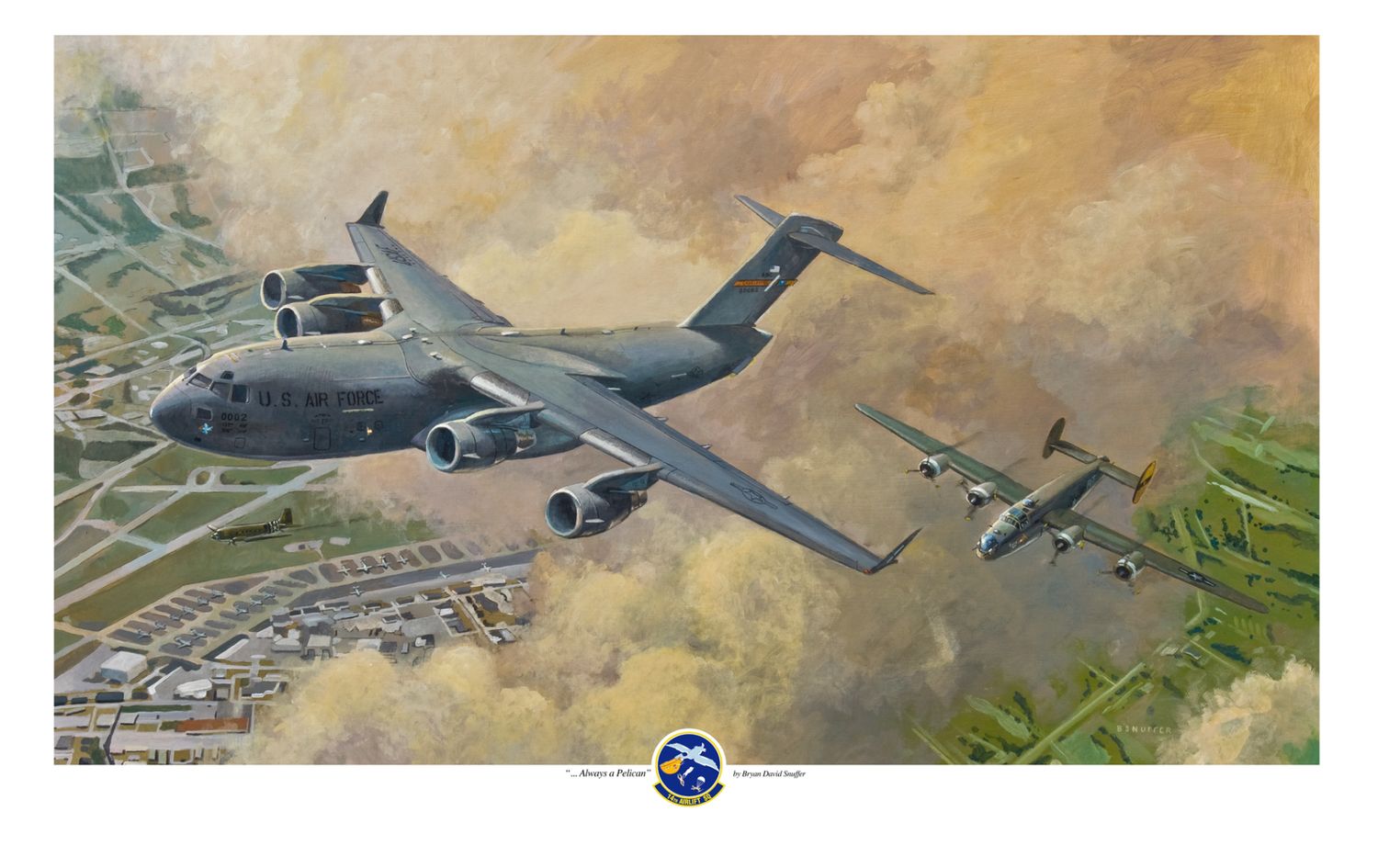
Own a piece of aviation history with "Always a Pelican," a masterfully composed tribute to the enduring legacy of the 14th Airlift Squadron. This striking work by historical artist Bryan David Snuffer captures the powerful bridge between the past and present, featuring the formidable C-17 Globemaster III soaring alongside the legendary B-25 Mitchell.
The piece utilizes a dramatic "noir" aesthetic, where the golden, atmospheric clouds serve as a canvas for the detailed textures of the airframes. Every brushstroke tells the story of Joint Base Charleston’s finest—from their WWII transport roots to their modern role in global mobility. This isn't just a print; it is a testament to the creed: "Once a Pelican... Always a Pelican!" Whether you are a veteran of the 14th, a C-17 enthusiast, or a collector of fine military art, this museum-quality reproduction brings the spirit of the squadron into your home or office with undeniable prestige.
Product Specifications
- Title: Always a Pelican
- Artist: Bryan David Snuffer
- Subject: 14th Airlift Squadron Heritage (C-17 Globemaster III & B-25 Mitchell)
- Overall Dimensions: 20" x 30"
- Image Dimensions: 15" x 26"
- Substrate: Heavyweight, acid-free fine art paper
- Inclusions: Official Certificate of Authenticity (COA)
- Shipping: Rolled and shipped in a reinforced, heavy-duty protective tube to ensure pristine delivery.
Collector's Note: This print is designed to fit standard frame sizes, allowing for easy mounting and display. The rich, archival pigments are chosen for their longevity, ensuring the dramatic lighting and historical detail remain vibrant for generations.
Preserving Your Investment: Unpacking & Care Instructions
A fine art print is a delicate asset. To ensure your new MH-6 Little Bird print maintains its vibrant colors and structural integrity for a lifetime, please follow these professional handling guidelines:
1. The Unpacking Process
- Wash Your Hands: Natural oils and dirt from your skin can leave permanent marks on the paper. If possible, wear clean cotton gloves.
- Gravity is Your Friend: Open the tube and let the print gently slide out. Avoid reaching in and "pulling" the print, as this can cause crescent-shaped creases (known as "handling kinks") in the heavy 300 gsm paper.
- Flattening Safely: Do not try to roll the print back against the curl. Instead, lay it flat on a clean, dry surface. Place a few heavy, flat objects (like large books) on the corners over the protective tissue paper for 24–48 hours until the paper relaxes.
2. Ideal Environment
- Avoid Direct Sunlight: Even with high-quality inks, prolonged exposure to UV rays can cause fading over time. Hang your artwork away from windows or in a spot that receives indirect light.
- Climate Control: Extreme fluctuations in humidity and temperature can cause the fine art paper to "wave" or buckle. Aim for a stable room temperature and avoid hanging art in bathrooms or directly above heat vents.
3. Framing for Longevity
- Use Acid-Free Materials: To match the quality of your 300 gsm acid-free paper, ensure your framer uses archival-grade matting and backing boards. This prevents "acid burn," which causes yellowing.
- Glazing Options: For maximum protection, consider UV-protective glass or acrylic. This adds a final layer of defense against light damage and environmental dust.
By following these steps, you ensure that this tribute to the Night Stalkers remains a centerpiece of your collection for generations to come.